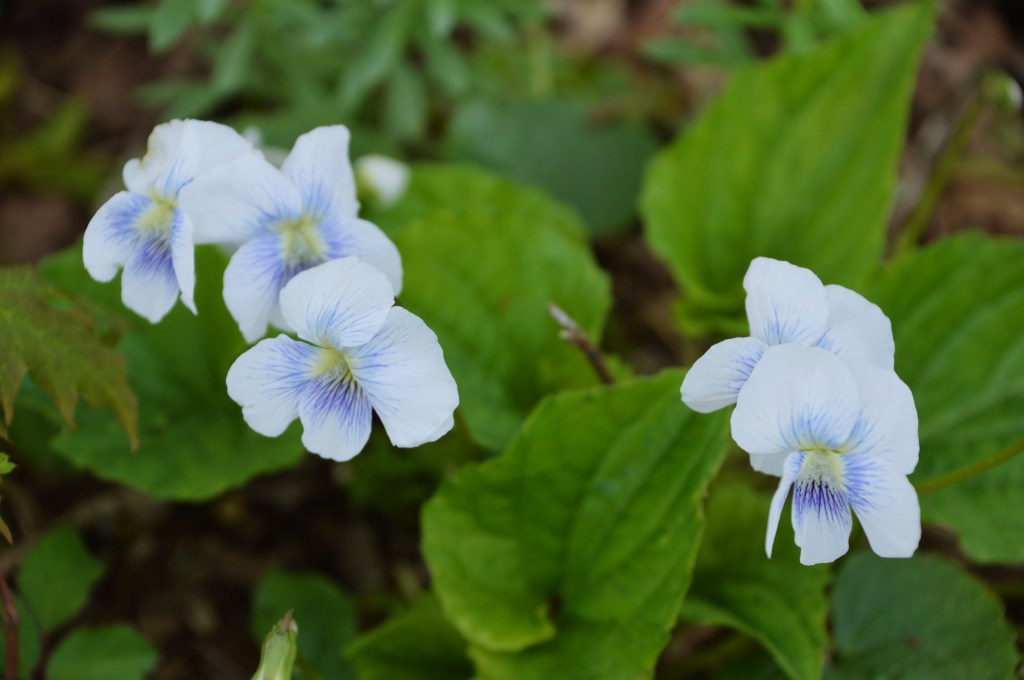
Every spring, my front lawn is awash in purple as the common blue violet (viola sororia) begins its bloom. A white-flowered variety (pictured above) makes its home under my crab apple tree. Both are charming native volunteers in my garden.
The common blue violet self-seeds and spreads readily, and some consider it a weed. That is unfortunate, because the common blue violet supports the caterpillars of several fritillary butterfly species. In addition, common blue violets are an important early nectar source for native bees such as the mason bee, miner bee, and sweat bee.
If you wish to see fritillary butterflies in your garden, you will need 3 ingredients: leaf litter to provide shelter to overwintering caterpillars, violet plants for the caterpillars to munch on in the spring, and nectar plants for the adult butterflies. Milkweeds, Joe Pye weed, native thistles, bee balm, and coneflowers are all good nectar sources for the adults. Providing good habitat for fritillaries and other butterflies means supporting them though all stages of their lifecycle. When you see these winged beauties fluttering through your garden, your efforts will be well worth it.
Sources:
Vicki Bonk, “Life Underfoot in the Violet Patch,” Neighborhood Greening (https://neigborhoodgreening.org)
“Viola Sororia,” Wikipedia

 Deb's Wild Garden
Leave a comment