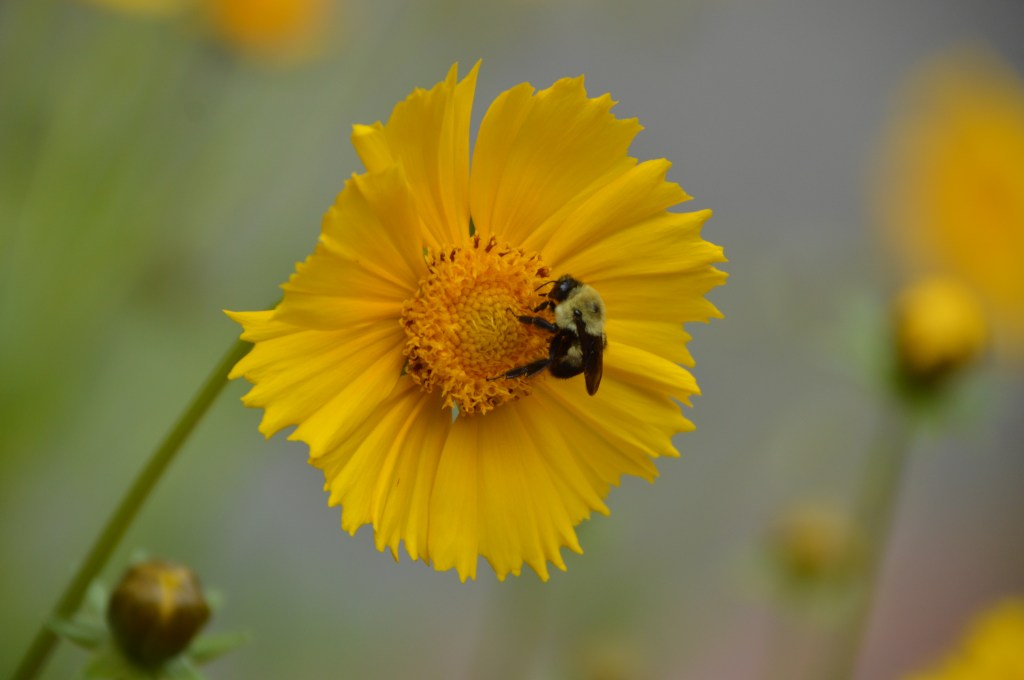
As recently as 2015, 11 species of bumblebees could be found in Massachusetts; today that number stands at 9, with 3 of those species in serious decline. While much attention has been focused on the threats to the non-native honeybee population (understandable given its tremendous importance to agriculture and the availability and price of much of the food on our tables), comparatively little consideration has been paid to the sharp losses suffered by our native pollinators. Native wild bees like the bumblebee play a crucially important ecological role, supporting native plant communities and their food webs. They are indispensable players in maintaining the health of our ecosystems.
Researchers like Rob Gegear of UMass Dartmouth have provided valuable insights into how to best help our native bumblebees. Interestingly, different species of bumblebees have differing tongue lengths, and these anatomical variations play a big role in the types of flowers the bumblebees will visit to collect pollen and nectar. Helpfully, Dr. Gegear has compiled a plant list to support different bumblebee species, and that list can be found here: Plants for pollinators at risk – GEGEAR LAB AT UMASS DARTMOUTH (weebly.com)
A personal goal for this gardening season: learn to identify bumblebees native to Massachusetts, and learn how I can make my own garden a better sanctuary for these amazing creatures.
 Deb's Wild Garden
Leave a comment